For children's hospitals and pediatric clinics

A living pond
for the waiting room.

Proties drift through a calm pond, and Genomies, small creatures each grown from its own genome, live along its shore. Children pick two Genomies, hatch a new one, and send it into the pond, where it is waiting for them at their next visit.

Artificial-life artworks by Ira Greenberg · Hospital edition in development

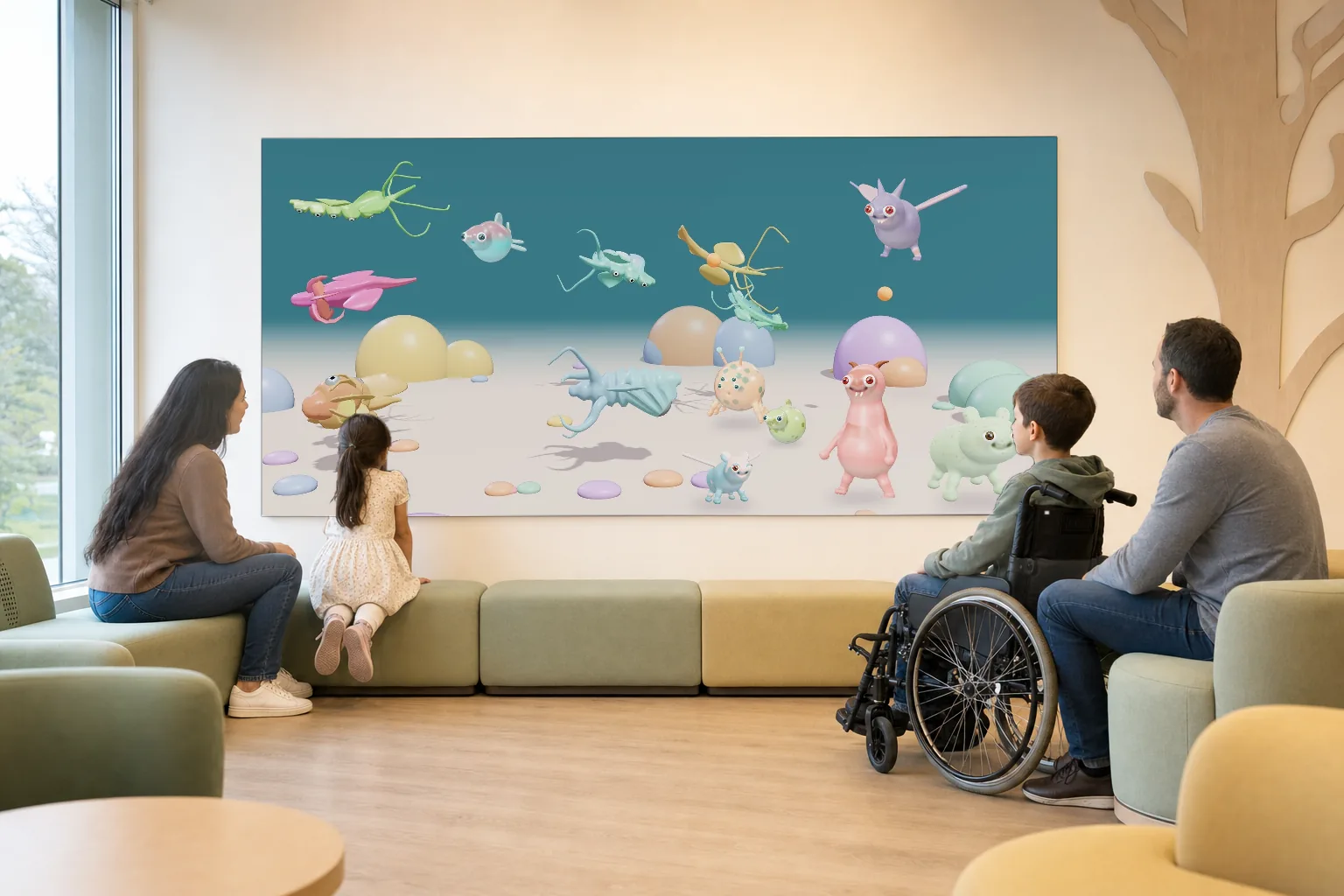
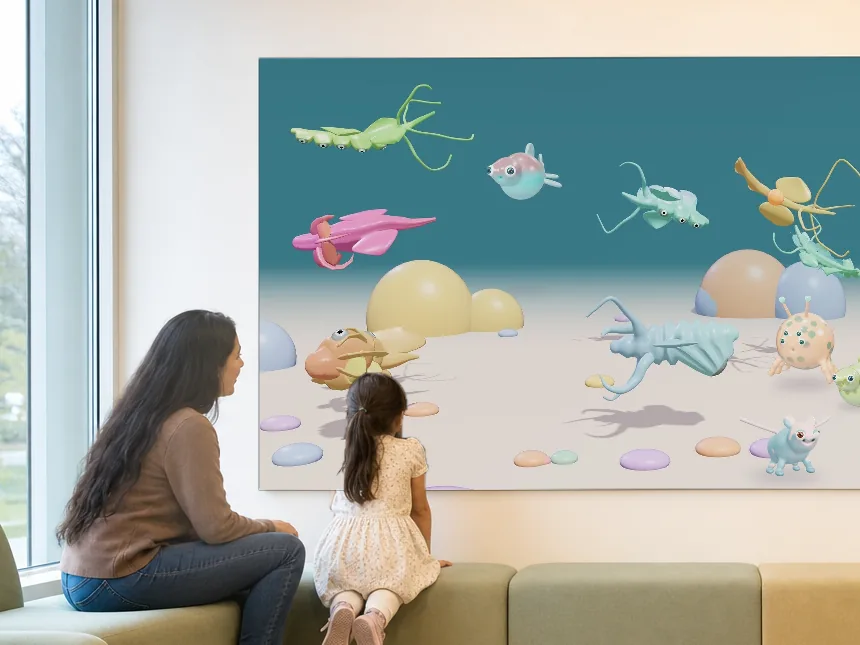
A bright pediatric waiting room. A wide, low screen shows a teal pond where pastel Proties swim and round, big-eyed Genomies stand on the sand. A girl kneels on the bench to look; a boy in a wheelchair and his father watch from the right.
Placement concept · outpatient waiting room. The screen shows real Proties, recorded from the running pond, and real Genomie renders, composed for this concept. The room and people are illustrative.
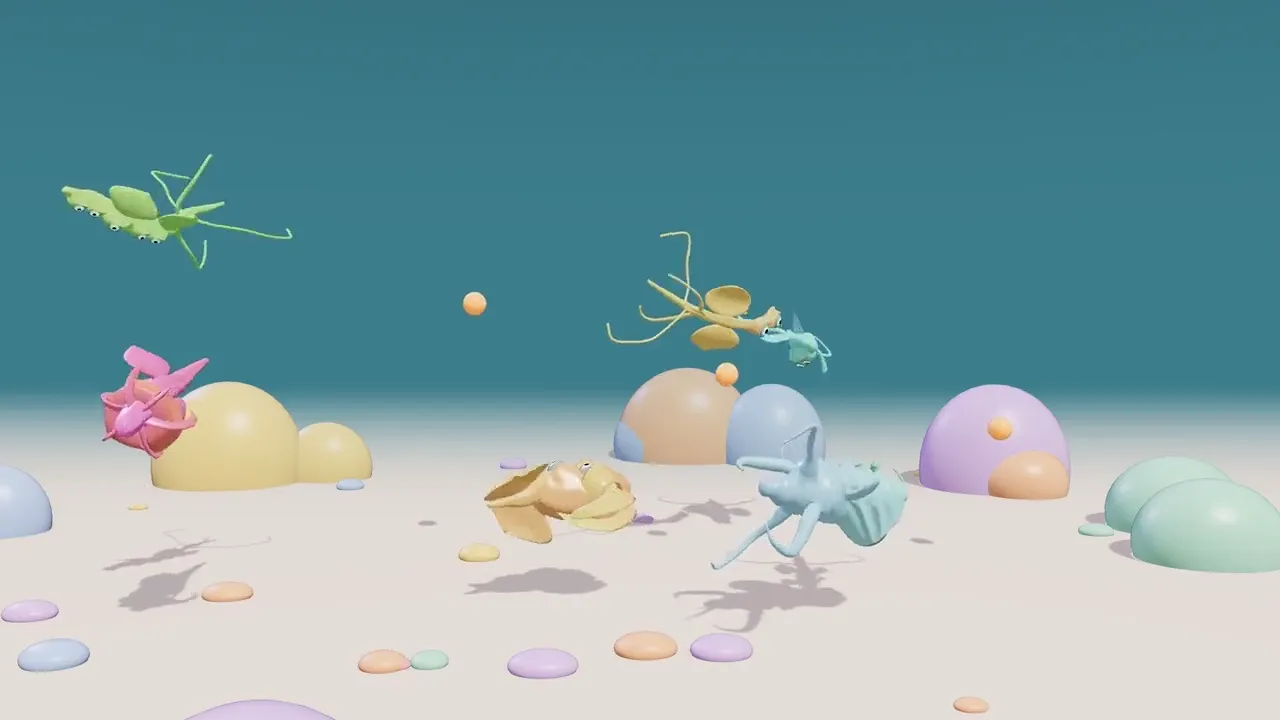
Proties in Feeding Time, recorded from the running pond. A 14-second loop; the installed work runs live.

What children see

A pond that notices you.

The Proties swim.

Soft pond creatures glide and explore at an unhurried pace. When food sinks into the water, the nearest one notices, swims over, eats, and then looks back at whoever is watching.

The Genomies live on the shore.

Twelve founding Genomies, each with a name and a temperament. Mossle naps in the sun, Brindle greets everyone, and Ombu keeps one great eye on you.

The pond turns toward children.

A depth sensor that reads shape and distance, never faces, lets the creatures turn toward a child walking past or waving. Nothing is recorded.

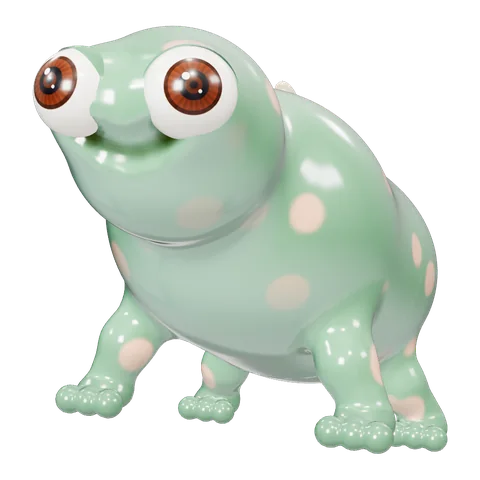
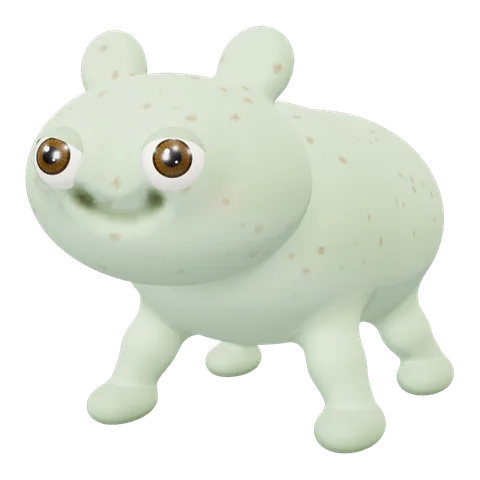
  • Mossle: a round, pale green, velvety four-legged creature with a wide smile.MossleA sleepy, velvet grazer that naps in the sun.
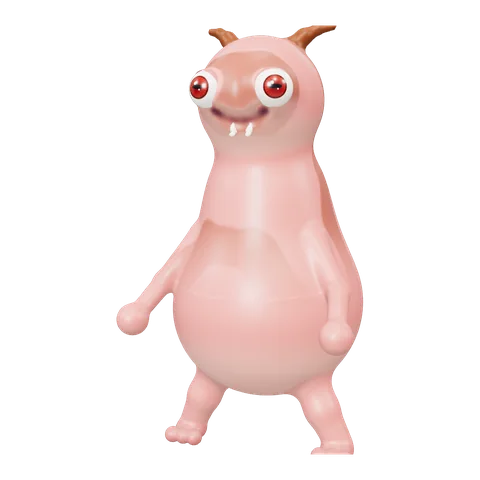
  • Brindle: a tall pink creature standing on two feet, with small horns and red eyes.BrindleStands tall on two feet and greets everyone.
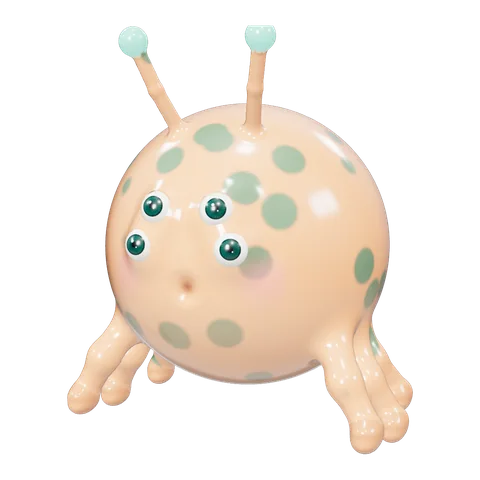
  • Pebbit: a round peach creature with green spots, four eyes, antennae and six little legs.PebbitSix quick legs and four eyes for spotting crumbs.
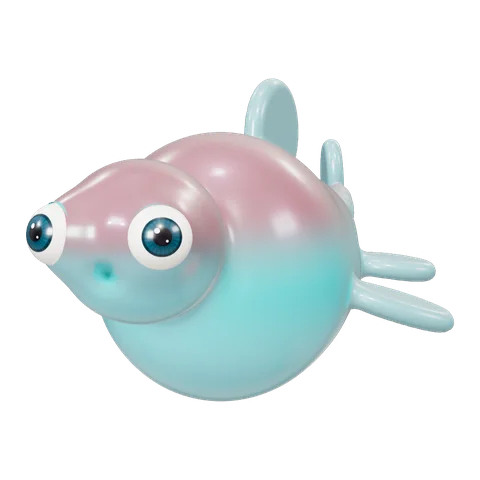
  • Fluvo: a pearly pink and aqua swimmer with fins and wide-set eyes.FluvoA pearly drifter with wide-set, curious eyes.
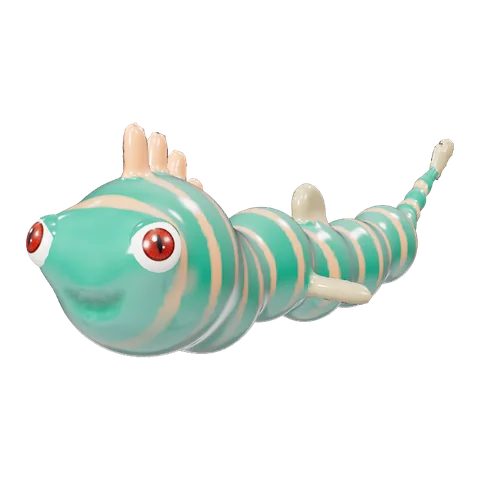
  • Rillow: a long, slim green swimmer banded in gold.RillowRibbons through reeds, banded in gold.
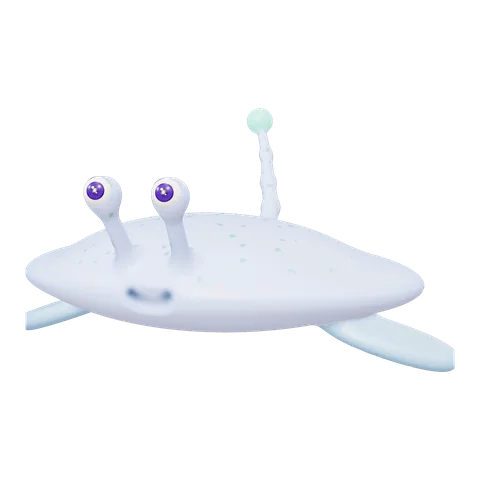
  • Bloomp: a flat, pale lavender glider with eyes on stalks and a lamp on its tail.BloompGlides flat along the bottom, lamp-tail first.
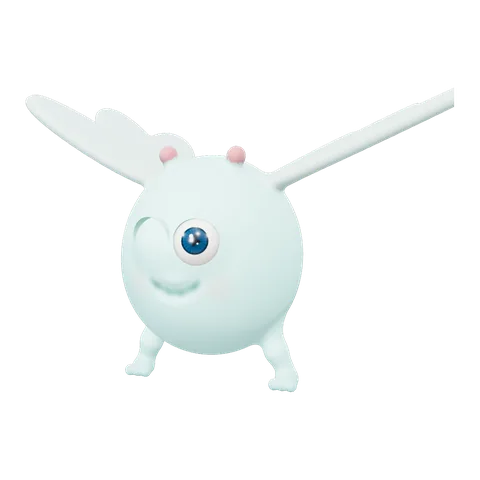
  • Zephlet: a small, pale aqua flyer with petal wings and one big eye.ZephletHovers on coral petals, always a little out of breath.
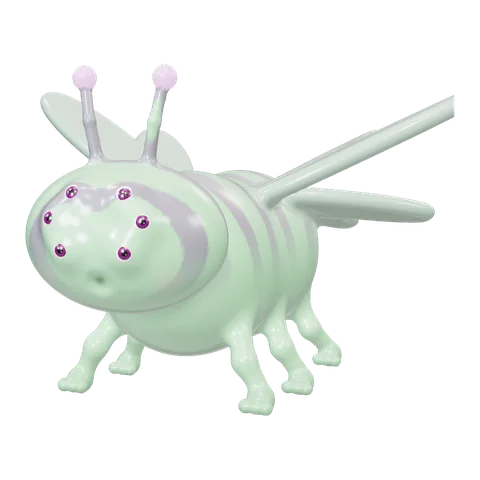
  • Skirrow: a striped green flyer with four wings, six eyes and antennae.SkirrowFour wings, six eyes, never lands for long.
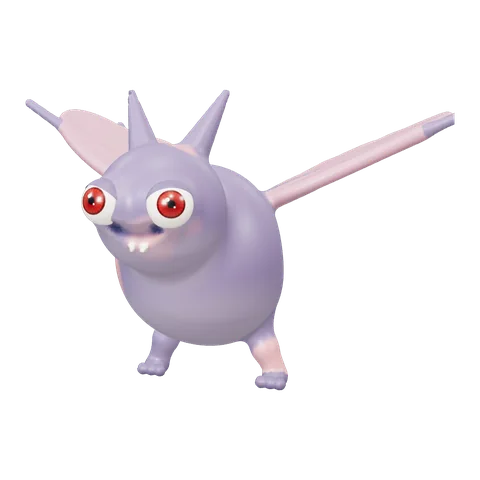
  • Vesper: a small violet flyer with tall ears, long pink wings and a shy grin.VesperA dusk flyer with tall ears and a shy grin.
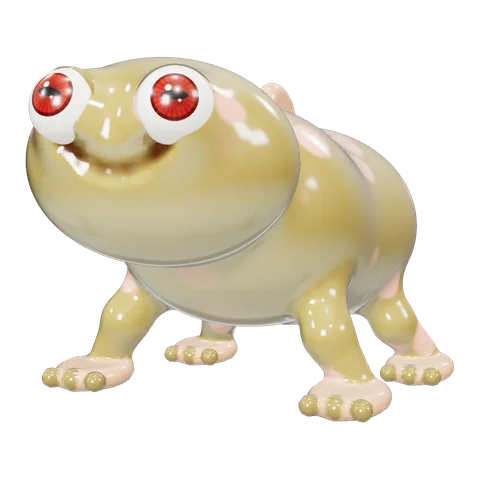
  • Marro: a golden, frog-like creature with big red eyes and a wide mouth.MarroHalf pond, half meadow, all mouth.
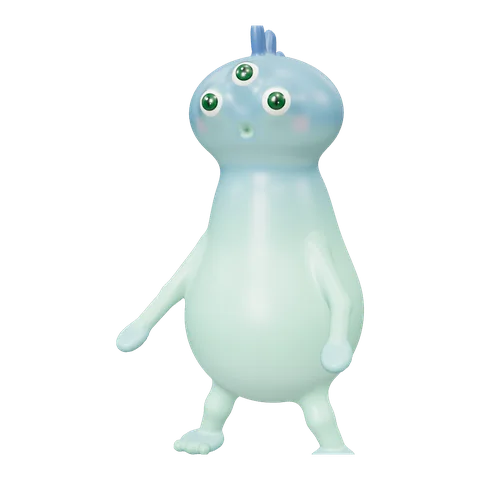
  • Quillip: a tall, pale blue creature with three eyes and an indigo crest.QuillipThree eyes, an indigo crest and paddles for skipping stones.
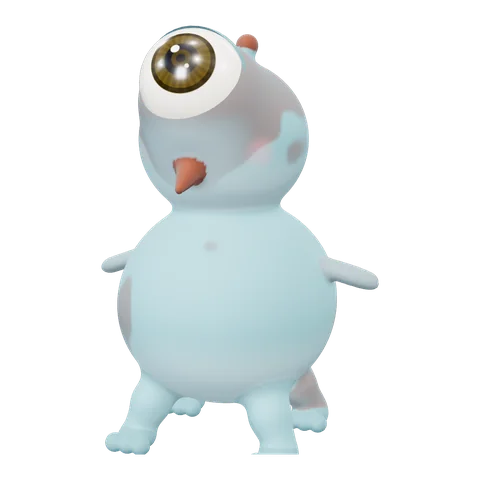
  • Ombu: a round, pale blue creature with one large eye and a little beak.OmbuOne great eye, always on you.
The twelve founding Genomies, each rendered from its own genome · 2026

What children do

Pick two friends.
Hatch a new one.

  1. 01 · Pick

    Choose two Genomies.

    At the wall's hatchery, on a family's phone or on a bedside tablet, a child picks any two Genomies. The screens use pictures first, in English and Spanish.

  2. 02 · Hatch

    Meet the new one.

    The newcomer carries a real mix of both parents' genes, so it looks like family and no two are ever the same. It arrives with its own name.

  3. 03 · Come back

    It waits in the pond.

    The new Genomie moves into the pond on the big wall. The child keeps a card with its picture and code, and at the next appointment the code calls it to the front of the pond.

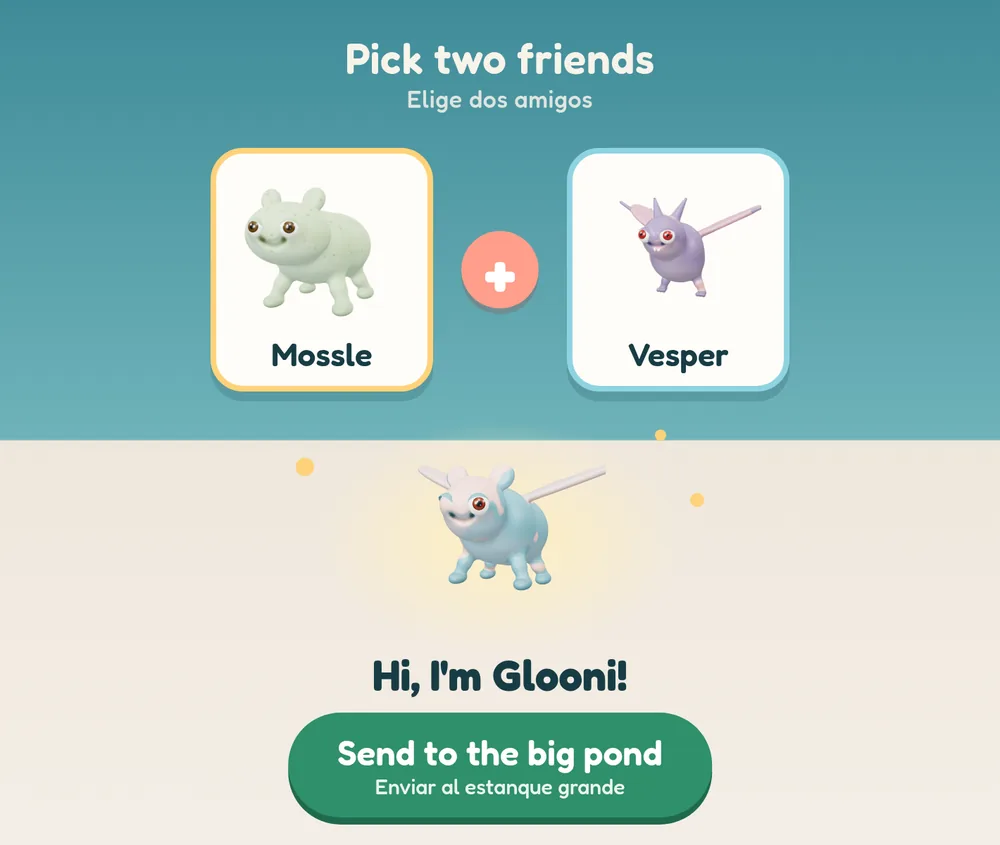
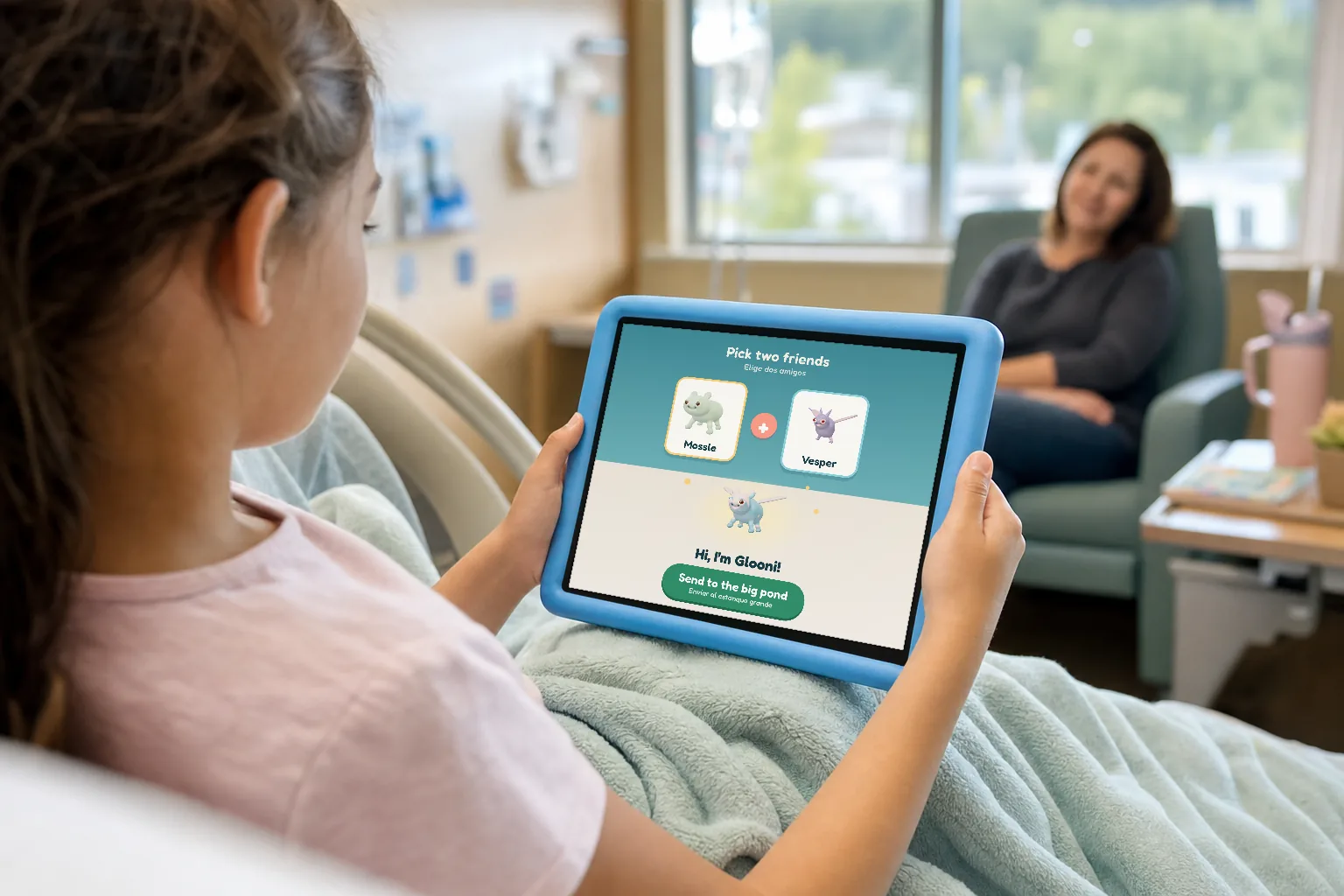
A hatchery screen: Pick two friends, with Mossle and Vesper on two cards joined by a plus sign. Below them, their hatchling Glooni says Hi, I'm Glooni, above a green button reading Send to the big pond, with Spanish beneath.
Design concept for the hospital edition's hatchery screen. The creatures are real renders.

Real hatchlings, from the founders above.

Each pair below was crossed by the Genomies genetics engine, the same one the hatchery will run. Every Genomie has 66 genes on 7 chromosomes, so a hatchling takes some features from each parent and is never a copy of either.

  • Mossle
    Vesper
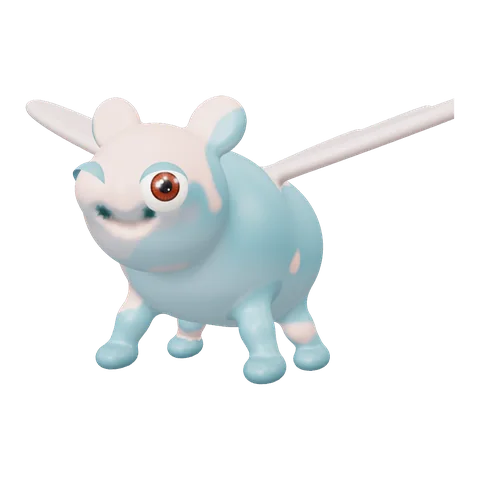
    Glooni: Mossle's round body and ears with Vesper's long wings, in pale blue and pink.
    Glooni
  • Pebbit
    Fluvo
    Plooffle: a round, spotted green body like Pebbit's, with Fluvo's fin and wide eyes.
    Plooffle
  • Ombu
    Marro
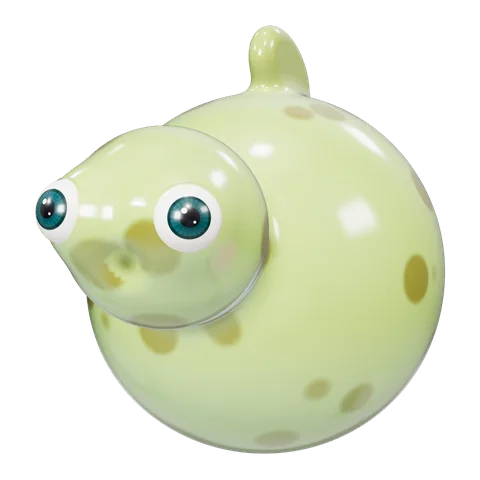
    Batepa: a green, frog-like body with big round eyes and pale spots.
    Batepa
  • Brindle
    Zephlet
    Polo: a cream, round-bodied little creature with Zephlet's wings.
    Polo

Why a living pond

What the research says about waiting.

Watching living things calms people.

At the UK's National Marine Aquarium, researchers measured visitors as a large tank was restocked. With more fish in the tank, people watched longer, their heart rates fell further and their moods lifted more. Most of the change came within the first five minutes.

Cracknell et al., Environment and Behavior, 2016 ↗ · a preliminary study
An interactive wait can lower anxiety.

Holland Bloorview Kids Rehabilitation Hospital in Toronto tested an interactive waiting-room wall in a randomized trial of about 300 children. The hospital reports lower waiting anxiety in children and higher satisfaction among parents and clinic staff.

ScreenPlay, NCT01909726 ↗ · results as reported by the hospital

Choice, company and distraction.

Roger Ulrich's theory of supportive design holds that a healthcare setting reduces stress when it gives people a sense of control, social support and positive distraction. Picking two Genomies is a choice a child gets to make. Hatching one with a parent or sibling is something they share. The pond is the distraction.

Ulrich, 1991 · tested in Andrade and Devlin, 2015 ↗

Shared toys are leaving waiting rooms.

The American Academy of Pediatrics advises against shared plush toys in waiting rooms because they are hard to clean, and suggests families bring their own. A pond that children play with from a distance leaves nothing to pass between them.

AAP, infection prevention in pediatric ambulatory settings, 2017 ↗

Working together

Three ways in.

Start with one room, connect a whole hospital, or make it a lasting gift.

A mother and her young daughter at the low pond wall in a waiting room, the girl kneeling on the bench to watch the creatures.

Infusion · oncology · dialysis · therapy

One waiting room

A pilot wall in the clinic where children wait longest or return most often. Six to twelve months, so the children who come back every week get to know their Genomies.

Over the shoulder of a girl in a hospital bed, holding a tablet in a blue protective case that shows the hatchery screen, with a parent in the chair behind.

Lobby · clinics · inpatient floors

One pond, every floor

Walls in the lobby and clinics share one pond, and children who cannot leave their rooms hatch from a bedside tablet. Their Genomie swims out onto the lobby wall for everyone to see.

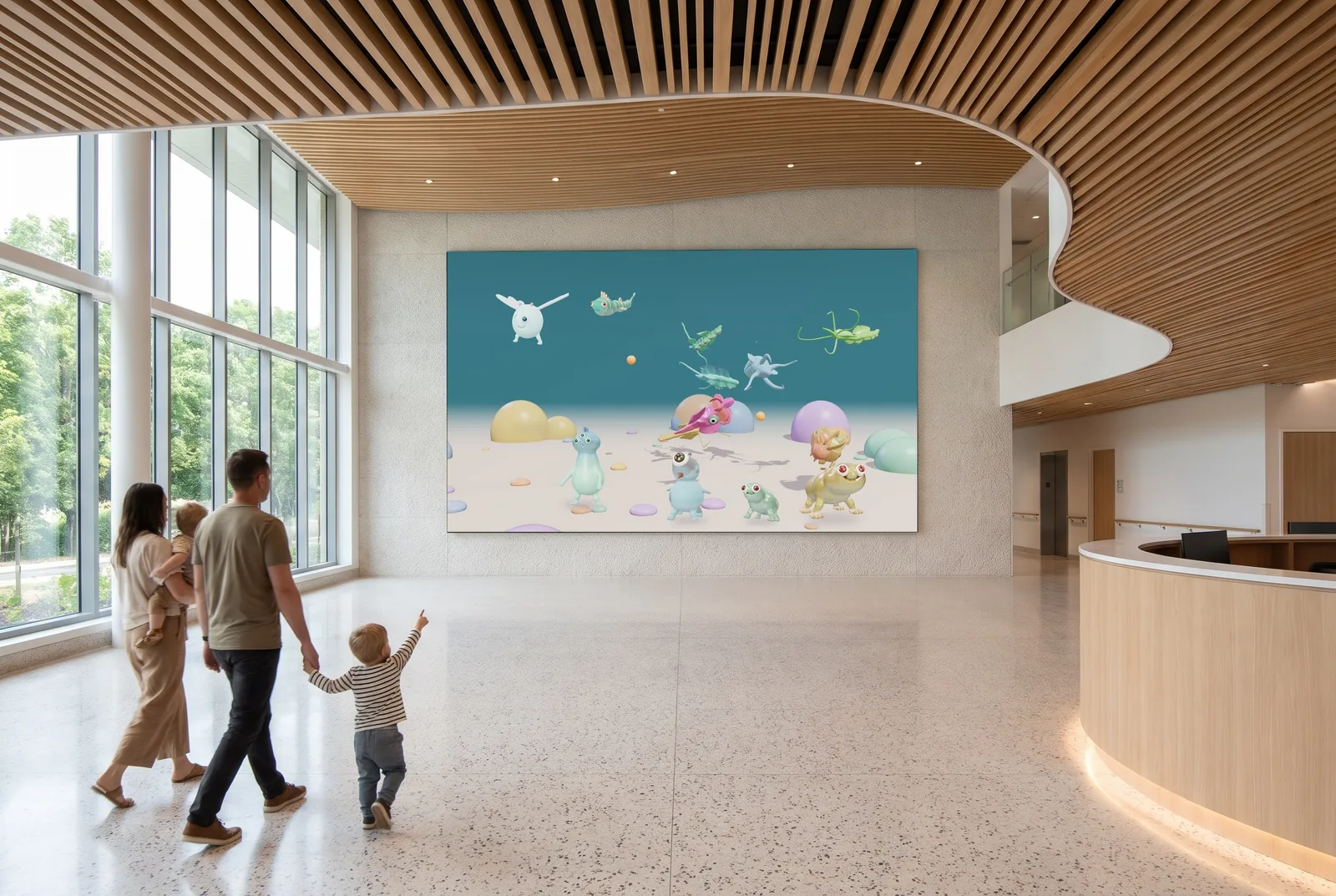
A two-story children's hospital lobby with a large pond wall. A family walks in and a toddler points up at a flying Genomie.

Foundation · named gift · permanent

A lasting gift

A permanent installation funded through your foundation, with a founding Genomie named with the donor. The pond keeps growing with every child who hatches into it.

The pond: pastel Proties swimming over pale sand and rounded corals.
Proties in Feeding Time · a frame from the recording above

For child life and care teams

Built to the rules of a children's hospital.

Child life, infection prevention, IT and patient experience each have a say in what goes on a pediatric wall. The hospital edition is designed around their rules from the start, and each pilot begins with a review by those teams.

Nothing dies
Creatures never die, get sick or get hurt. There are no scores, no timers and no way to lose.
Nothing to touch
Children play by moving, or from a phone or bedside tablet. The optional hatchery station is sealed glass that wipes down with your standard disinfectant.
No one's data
No camera images, accounts, typed names or photos. Children choose their Genomie's name from a list, and nothing about the child is stored.
Calm by design
Slow movement, soft color and no flashing, well inside the three-flashes-per-second limit in WCAG 2.3.1. Silent by default.
Within reach
The pond is hung at seated and wheelchair height, and the hatchery works from a bed. Pictures come first, with words in English and Spanish.
Gentle words
Children hatch Genomies and find surprises. Genetics terms appear only when a teen or parent asks, which matters most in genetics clinics.
Fasting areas
Before surgery, food in the pond becomes bubbles, so no child who cannot eat is watching a feeding.
Staff in charge
Quiet hours, a night mode and a pause button, all from a staff tablet.

The hospital edition is in development. Its first pilot partner helps shape it.

Installation

What it takes.

Your hospital provides

  • A wall, or a place for a large display
  • Power, plus guest Wi-Fi if families will hatch from phones or bedside tablets
  • An hour each with child life, infection prevention and IT to review the plan

ProtoTanks provides

  • The artwork and its software
  • The display, computer and sensor, specified for your room and mounted with your facilities team
  • A cleaning guide written with your infection-prevention team
  • Installation, updates and care for the length of the agreement

Runs unattended on its own computer. The wall works offline; phone and bedside hatching use guest Wi-Fi, never the clinical network.

The artist

More than two decades of artificial life.

Ira Greenberg is an artist and professor who has grown organisms in code since 2004, moving from drawn computational anatomy to real-time works and evolving populations. He is the author of Processing: Creative Coding and Computational Art (2007) and contributed to the Processing 1.0 development team. Protobyte Phylogeny was shown at Gray Area in San Francisco in fall 2026. The Proties and Genomies are his newest creatures, made for younger audiences.

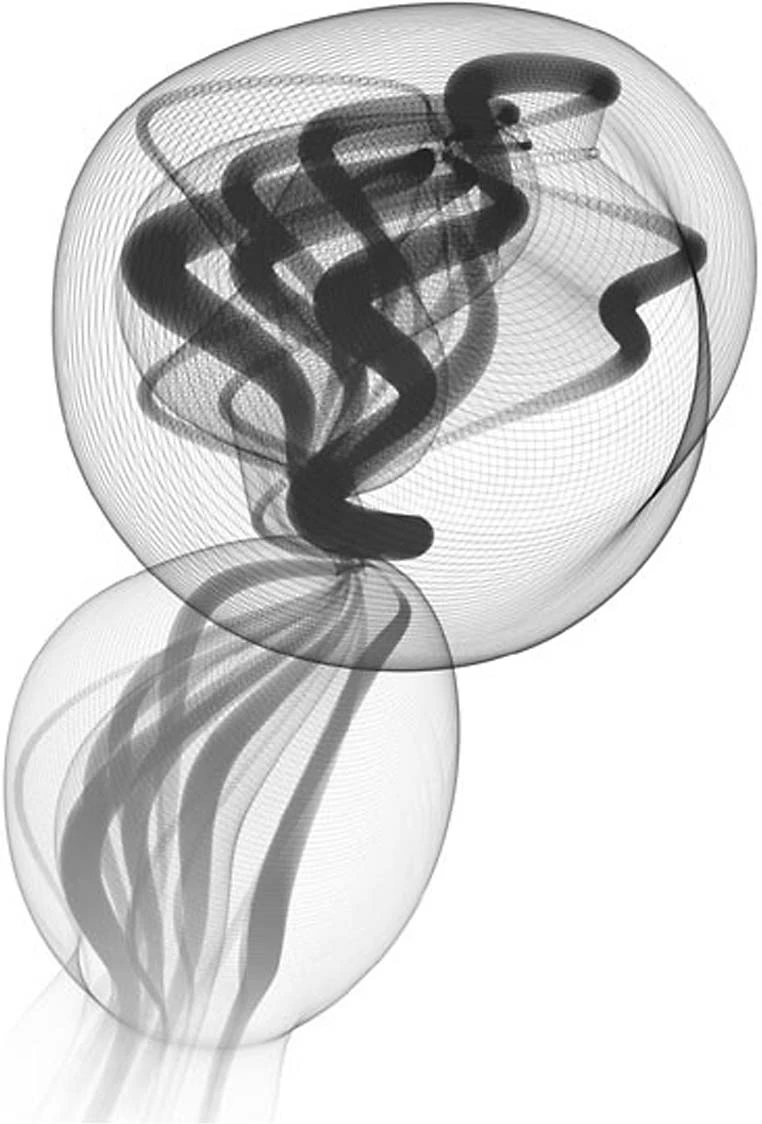
Jellyfish.01: a line drawing of a translucent jellyfish built from repeated curves.
Jellyfish.01 · 2004

Arrange a demonstration

See the pond running.

A twenty-minute demonstration over video for your child life, patient experience or foundation team, or in person at your hospital.

Dave Greenberg, Ed.M. Director of Strategic Partnerships
Email Dave